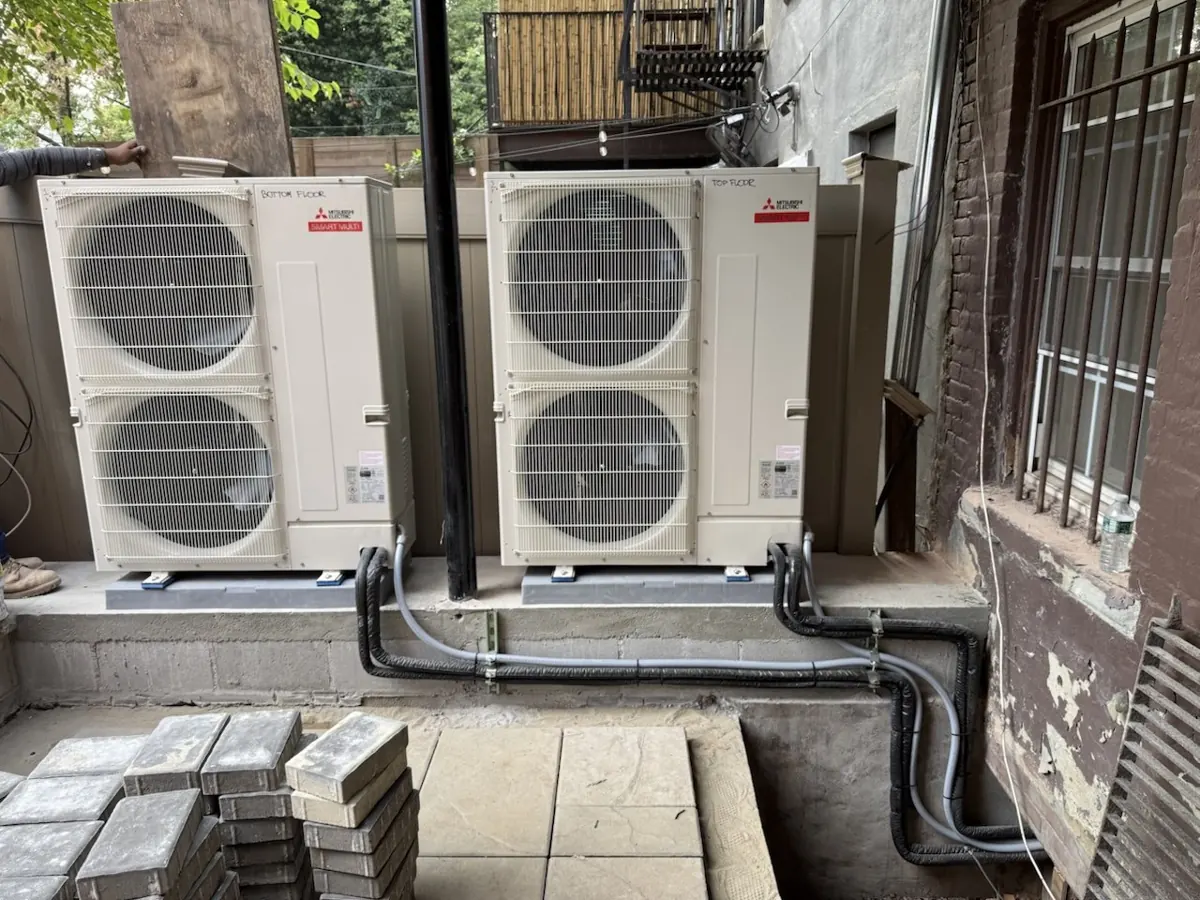
Heat pump installation cost in Los Angeles is driven by a handful of factors that you can see coming before anyone hands you a quote: the type of system (ducted, ductless or a mix of zones), the capacity your home actually needs, the efficiency tier you pick, the condition of your ductwork, your electrical panel, how hard the equipment is to reach, and the permit and Title 24 work required by your city. Rebates from your utility can then pull the net number back down.
If you understand those factors, you can read any quote with a clear eye, ask the right questions and avoid paying for things you do not need. This guide walks through each one in plain language, with no made-up price ranges, because the honest answer to "how much?" is always "it depends on your house." What follows is exactly what it depends on.
Why heat pump installation cost in Los Angeles varies so much
Los Angeles has an unusually wide spread of housing. A 1920s Spanish Revival in Los Feliz with no ducts at all, a mid-century ranch in Studio City with a tired attic duct system, a Hollywood Hills house cantilevered over a slope, and a condo in West Hollywood with HOA rules about where equipment can go are all "LA homes," and each one changes the scope of a heat pump job in a different way.
On top of the housing, the city is split into many permit jurisdictions and several utilities. The City of Los Angeles permits through LADBS, while Beverly Hills, West Hollywood, Burbank and Glendale each run their own building departments. Rebates depend on whether you buy power from LADWP, SCE, Burbank Water and Power, Glendale Water & Power or Pasadena Water and Power. Two neighbors on either side of a city line can face different paperwork.
So when friends compare numbers, they are usually comparing different scopes. The useful question is not "what did you pay?" but "what was included?"
The factor table: what moves the number
Here is the short version. Each row is explained in more detail below.
| Cost factor | Why it matters | How to keep it in check |
|---|---|---|
| System type (ducted, ductless, zones) | Each indoor unit, zone and line set adds equipment and labor | Zone only the rooms that need it; reuse sound ducts where possible |
| Capacity | Larger units cost more and can be less comfortable if oversized | Insist on a Manual J load calculation, not a rule of thumb |
| Efficiency tier and variable speed | Higher-tier, inverter-driven equipment costs more up front | Match the tier to how hot your area runs and how long you will stay |
| Ductwork condition | Leaky, undersized or damaged ducts may need repair or replacement | Get the ducts inspected; repair what fails, keep what passes |
| Electrical panel and circuits | A new dedicated circuit is standard; a panel upgrade is a bigger job | Ask for a panel load check and options like circuit sharing |
| Line set length and access | Hillsides, rooftops and condos add piping, lifting and labor time | Plan placement early to shorten runs and simplify access |
| Permits, Title 24 and HERS | Required testing and inspections add time and fees | Hire a contractor who pulls the permit and schedules HERS for you |
| Removal of old equipment | Old furnaces, AC units and refrigerant must be handled properly | Confirm haul-away and refrigerant recovery are in the written scope |
| Rebates | Utility and state incentives can offset part of the cost | Check eligibility before choosing equipment; keep all paperwork |
System type: ducted, ductless or a zoned mix
The single biggest scope decision is how the heat pump delivers air.
Ducted heat pumps replace a conventional AC and furnace with an outdoor heat pump and an indoor air handler (or a furnace used as backup). If your ducts are in decent shape, this is often the most direct path, because most of the distribution system already exists.
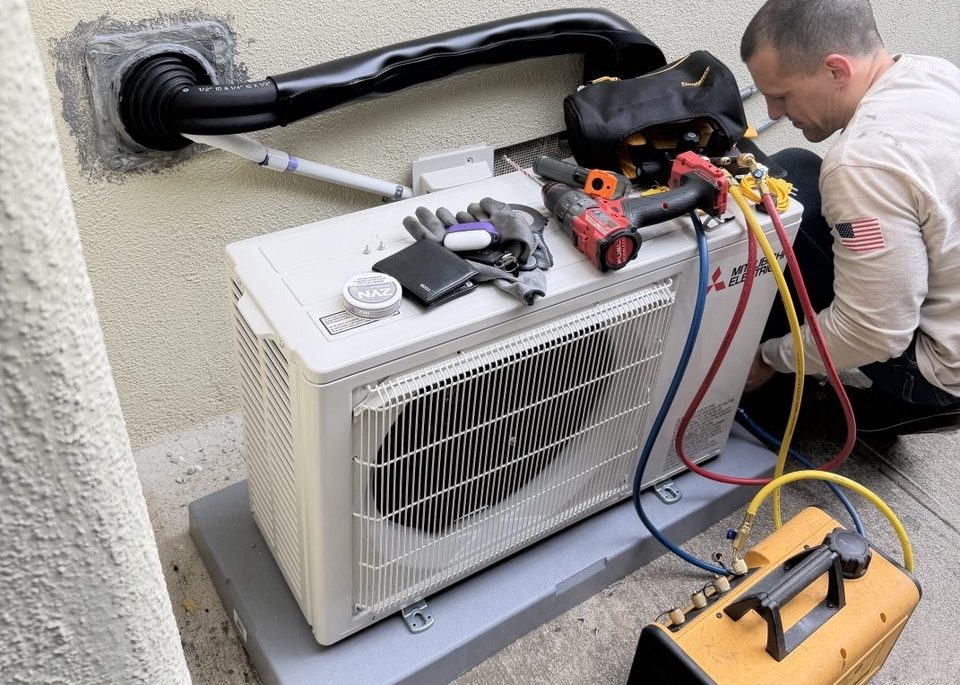
Ductless mini splits put an indoor head in each conditioned space and connect each one to an outdoor unit through refrigerant lines. A single-zone system for one bedroom or a converted garage is a contained job. A multi-zone system for a whole house has more heads, more line sets, more condensate drains and more wall penetrations, and each of those adds labor. Our multi-zone mini split design guide covers how zones are planned.
Hybrid layouts are common in LA: a ducted system for the main floor and a ductless head for a bonus room, an ADU or a hot upstairs office. That can cost less than forcing ducts into a space where they do not fit.
If you are weighing approaches, read ducted vs ductless heat pumps in California before you request quotes. You will get far more comparable bids if each contractor is pricing the same layout.
Capacity: what Manual J has to do with your quote
Capacity is the size of the system, and it is one of the easiest places to overpay. Older rules of thumb (a ton per so many square feet) tend to oversize systems in LA, where many homes have been updated with better windows or insulation. An oversized heat pump costs more to buy, can short-cycle, and often leaves rooms clammy or uneven.
A Manual J load calculation looks at your actual walls, windows, orientation, insulation, ceiling height and local climate. A west-facing Valley home with large glass walls needs a very different answer than a shaded house near the coast of the same size. Our article on what size AC you need explains the process, and it applies equally to heat pumps.
Efficiency tier and variable-speed equipment
Heat pumps are rated with SEER2 for cooling and HSPF2 for heating, and California falls in the DOE Southwest region, which carries higher minimums for central air conditioning, including an EER2 requirement. Your contractor must install equipment that meets current minimums; beyond that, you choose how far up the efficiency ladder to go.
Higher tiers usually mean inverter-driven, variable-speed compressors. They ramp up and down instead of switching fully on and off, which helps with even temperatures, quieter operation and humidity control. They cost more up front. Whether the premium pays off depends on how hot your area runs, how much you run the system and how long you plan to stay. A Woodland Hills or Burbank home that cools hard from August through October has a stronger case for a higher tier than a mild coastal-adjacent home.
Also note that new residential heat pumps manufactured from 2025 use A2L refrigerants such as R-454B or R-32. That is simply the current standard; it should not be a surprise line item, but it does mean the whole system should be matched as a set rather than mixing new outdoor units with old indoor coils.
Ductwork condition: reuse, repair or replace
Many LA homes built between the 1920s and 1960s either have no ducts or have attic and crawlspace ducts that are decades old, poorly sealed and sized for a different era. Ductwork is often where quotes diverge the most.
- Reuse as-is: possible when ducts are sound, properly sized and reasonably tight.
- Repair and seal: fixing disconnected runs, crushed flex duct and leaky joints, sometimes adding a return.
- Replace: new ducts sized for the new system. When ducts are altered or replaced, Title 24 may trigger duct leakage testing by a HERS rater.
A heat pump can only perform as well as the air delivery behind it. If you are told your ducts need work, ask to see what was found: photos of disconnected runs, a missing return, undersized trunk lines. Our ductwork installation page explains what a proper duct job involves.
Planning a new system? Get a free in-home estimate with a load calculation and a written quote with exact model numbers. Call (818) 230-4038 or use the form — or text us a photo of your current system.
Electrical panel and circuits
A heat pump replaces gas heating with electric heating, so the electrical side matters. Every installation needs a correctly sized dedicated circuit and a disconnect at the outdoor unit. That is normal scope.
The bigger variable is your panel. Older LA homes may have 100A panels already serving an electric range, dryer, EV charger or pool equipment. If the panel does not have capacity, options include:
- A panel load calculation to confirm what you actually have room for (often more than people assume).
- Circuit-sharing devices or a smart panel that manage loads so a full upgrade is not required. Whether these fit depends on your equipment and local rules.
- A service or panel upgrade, which is a larger project and may involve the utility.
When you are replacing an existing central AC, the heat pump often uses a circuit similar to what is already there. When you are adding cooling or heating to a home that never had it, the electrical scope tends to grow.
Line set length and access: hillsides, rooftops and condos
Access is the factor homeowners underestimate most. Labor time climbs when crews have to carry equipment down a hillside stair, run long refrigerant line sets through a finished house, or set a unit on a roof.
- Hillside homes in the Hollywood Hills, Studio City and Glendale often have steep access, limited flat ground and equipment on decks or retaining walls. Long line sets add material and brazing time. See our guide to HVAC for hillside homes.
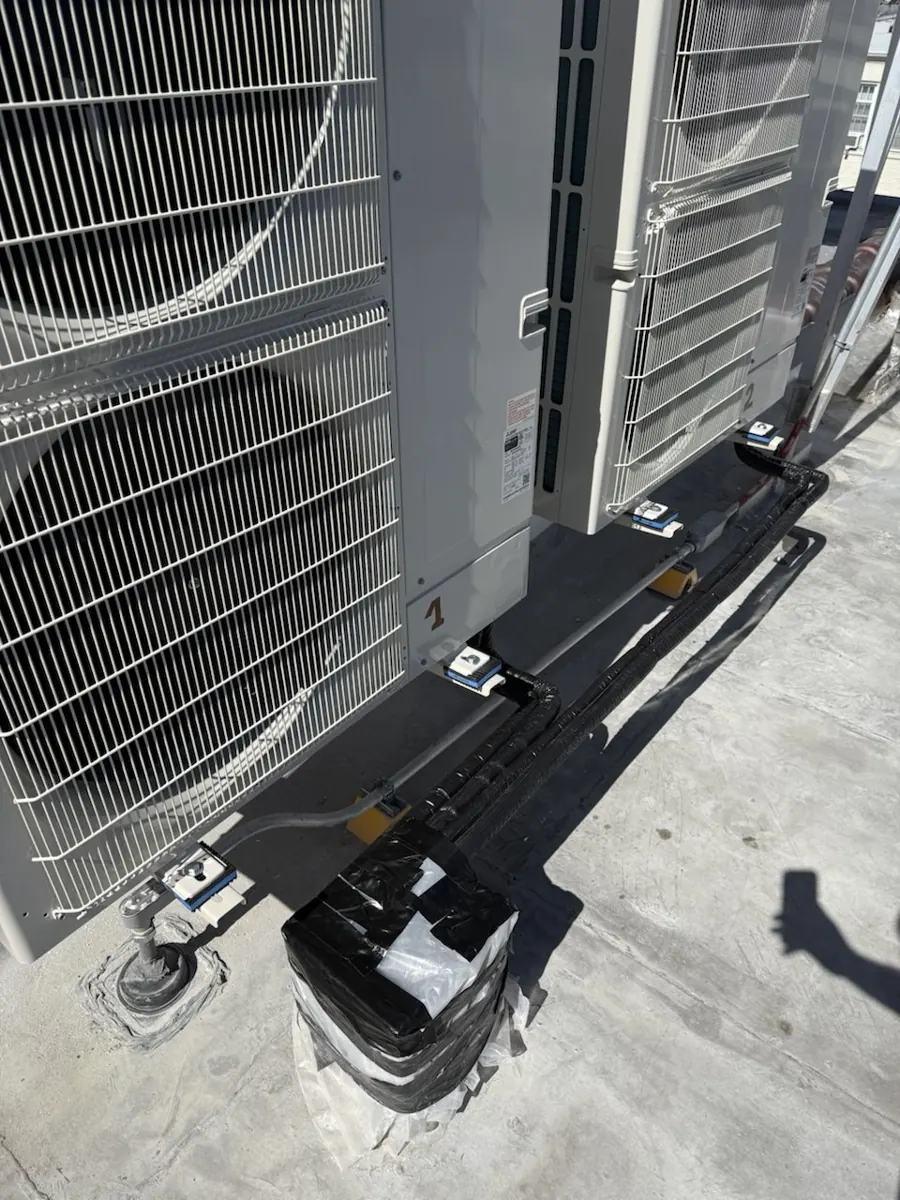
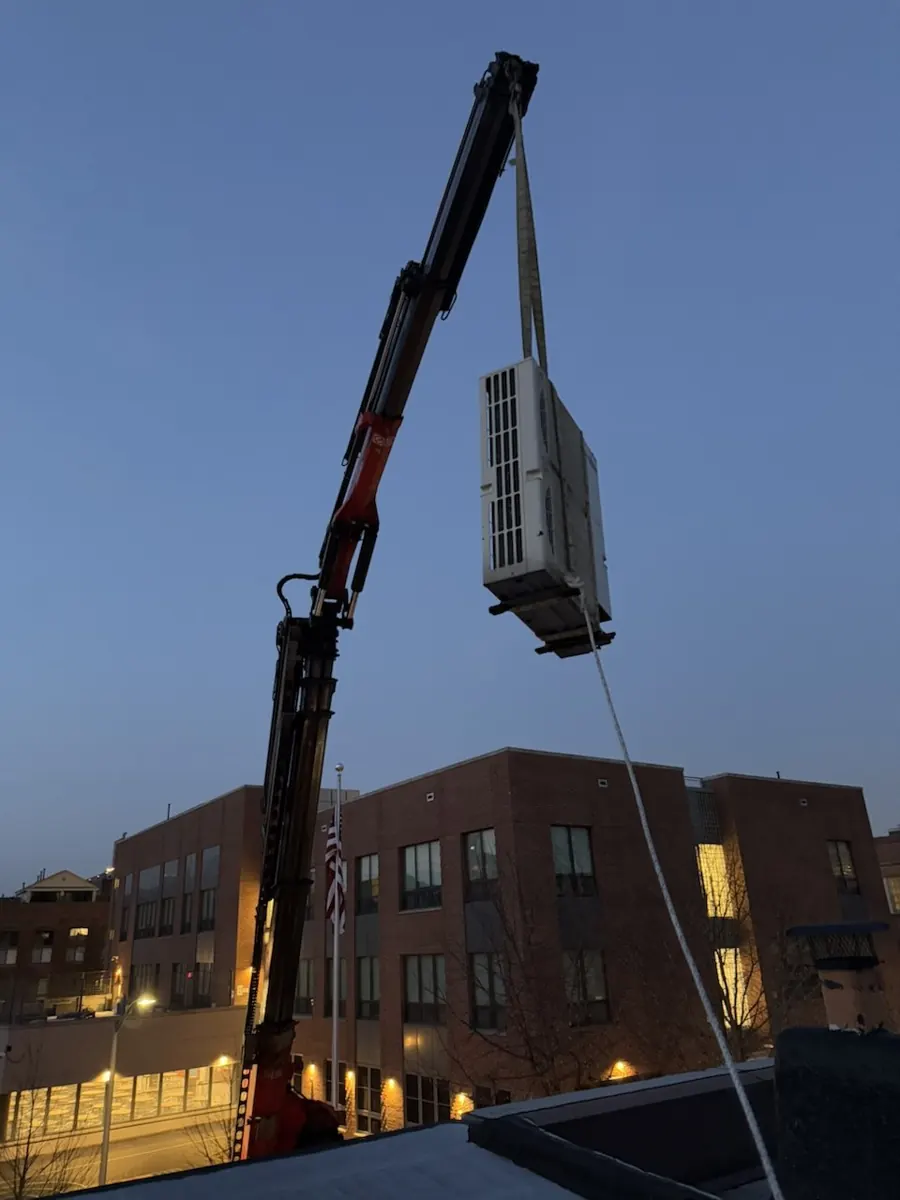
- Rooftop units may need a crane or lift for heavy equipment, plus roof work for curbs and penetrations.
- Condos and townhomes may restrict outdoor unit placement, require HOA approval, and limit which walls can be penetrated.
“We recently had our rooftop AC unit replaced by Back2Cool HVAC, and we’re very happy with how everything turned out. Replacing an entire AC system is a pretty big job, so we wanted to make sure we hired someone who knew what they were doing.”
Стас Стасян · Google review
Placement decisions made at the estimate stage can shorten line runs and cut labor significantly. Ask your contractor to walk the property and explain where each piece will sit and why.
Permits, Title 24 and HERS verification
A permitted heat pump installation in Los Angeles involves a permit from your city (LADBS for the City of LA; separate departments in Beverly Hills, West Hollywood, Burbank and Glendale), compliance with Title 24 Part 6, and in many cases HERS verification of refrigerant charge, airflow and duct leakage depending on scope.
These steps add fees and scheduling, but they are not optional extras. Skipping the permit can create problems with rebates, home sales and insurance claims, and an unpermitted job has no third-party check on the work. Our article on AC replacement permits in Los Angeles covers the process in detail. When comparing quotes, a bid that leaves out the permit is not cheaper; it is just incomplete.
Removing old equipment
Most heat pump jobs in LA replace something: an old furnace in the attic or hall closet, an aging condenser, a wall unit or window units. Removal involves disconnecting gas and electrical, recovering refrigerant properly, patching openings and hauling the equipment away. Rooftop and attic removals take more labor than a ground-level condenser. Make sure removal and disposal are written into the scope so they do not appear as a surprise.
Rebates that offset heat pump installation cost in Los Angeles
California has pushed hard toward heat pumps, and LA-area utilities have offered incentives for qualifying equipment. Programs from LADWP, SCE, Burbank Water and Power and Glendale Water & Power, along with statewide initiatives like TECH Clean California, can reduce the net cost. Funding, amounts and requirements change, so check current rules before you commit to equipment. Many programs require specific efficiency ratings, a permit, an AHRI reference and sometimes pre-approval.
Note that the federal 25C tax credit for heat pumps expired for equipment placed in service after December 31, 2025; talk to a tax professional about your situation. Our California heat pump rebates guide and rebates page go deeper.
How to compare heat pump quotes fairly
- Same layout. Make sure each bid covers the same zones and the same ducted or ductless approach.
- Model numbers. Every quote should list exact outdoor and indoor model numbers so you can check ratings and rebate eligibility.
- Load calculation. Ask how capacity was determined.
- Ducts and electrical. Is duct repair included? Is a panel upgrade needed, or is a new circuit enough?
- Permit and testing. Is the permit pulled by the contractor? Is HERS testing included?
- Removal and cleanup. Is old equipment hauled away?
- Rebate paperwork. Who files it, and when?
How HVAC Installation LA handles this
Every quote we write starts with a Manual J load calculation, and you get a written quote with exact model numbers, scope and price, so you can see exactly what drives the number. We often quote options side by side, such as keeping an AC and furnace versus switching to a heat pump, or a ducted system versus ductless zones. We pull the permit, handle Title 24 and HERS testing, and file the utility rebate paperwork with LADWP, SCE, BWP or GWP when your equipment qualifies. On install day we cover floors, clean the site and haul the old equipment away.
Our lead tech is trained on Mitsubishi Electric, Daikin and Fujitsu equipment, and we work with major ducted brands as well. Learn more about our heat pump installation service, our HVAC replacement work, or the brands we install like Mitsubishi Electric and Daikin. In-home estimates for installations are free. Call (818) 230-4038, email estimates@hvacinstallationla.com, or request an estimate online.
Frequently Asked Questions
01Why are heat pump installation quotes in Los Angeles so different from each other?
Quotes vary because the scope varies: system type, capacity, efficiency tier, duct repairs, electrical upgrades, access and permit work. Compare written quotes line by line, with model numbers, before comparing totals.
02Does a bigger heat pump cost more to install?
Usually, yes. Larger capacity means more expensive equipment and sometimes bigger line sets and circuits. A Manual J load calculation keeps you from paying for capacity your home does not need.
03Will I need a new electrical panel for a heat pump?
Not always. Many homes have room for the new circuit, especially when a gas furnace or old AC is being replaced. Older homes with smaller panels may need a load calculation, and some can avoid a panel upgrade with circuit-sharing devices or a smart panel.
04Are permits and HERS testing really required for a heat pump changeout?
In most LA jurisdictions, yes. Title 24 Part 6 applies to HVAC changeouts, and HERS verification may be required depending on scope. A permitted job is also usually required for utility rebates.
05Can rebates lower my heat pump installation cost?
Often. LADWP, SCE, Burbank Water and Power, Glendale Water & Power and statewide programs like TECH Clean California have offered heat pump incentives, but amounts and availability change. Confirm eligibility before you choose equipment.
06Is a ductless heat pump cheaper than a ducted one?
It depends on the house. A single-zone ductless system can be the simplest option for one area, while a home with good existing ducts may be cheaper to convert with a ducted heat pump. Each extra zone adds equipment and labor.