HVAC for hillside homes in Los Angeles has to solve three problems flat-lot homes rarely face at once: intense sun on large expanses of glass, split-level floor plans that one thermostat cannot balance, and equipment placement on steep, tight or elevated sites with difficult access. Whether you need a Hollywood Hills AC installation, a heat pump for a Studio City canyon home or zoned cooling for a terraced house in Glendale, the right system starts with a careful load calculation, a zoning plan by level and exposure, and an equipment location that is serviceable, quiet and practical to install.
This guide walks through each of those pieces, along with the hillside-specific issues of long line sets, crane lifts for rooftop equipment, neighbors and noise, HOA and hillside rules, wildfire smoke and Santa Ana winds.
Why hillside homes heat up differently
Hillside architecture in LA is built around the view, and views mean glass. Floor-to-ceiling windows, sliding walls and clerestories facing south or west can load a room with solar heat that dwarfs what the walls and roof contribute. A living room with a big west-facing glass wall above the Valley can be comfortable at noon and overheated by late afternoon.
Elevation and exposure matter too. A house perched on a ridge catches more sun and wind than one tucked in a canyon. Upper levels collect rising heat. Lower levels built into the slope may stay cool on their own because earth surrounds them on one or more sides.
All of this means rules of thumb based on square footage fail badly on hillside homes. A Manual J load calculation that accounts for actual glass area, orientation, shading and each level separately is the only reliable starting point. Our guide on what size AC you need explains why.
Zoning split-level hillside homes
Many Hollywood Hills and Studio City homes step down the slope: a garage and entry at street level, living areas below, bedrooms below that. Others stack upward from a lower driveway. A single ducted system with one thermostat almost always leaves some levels too warm and others too cold.
Practical zoning approaches for hillside homes include:
- A separate system per level. Each floor gets its own ducted unit or heat pump with its own thermostat.
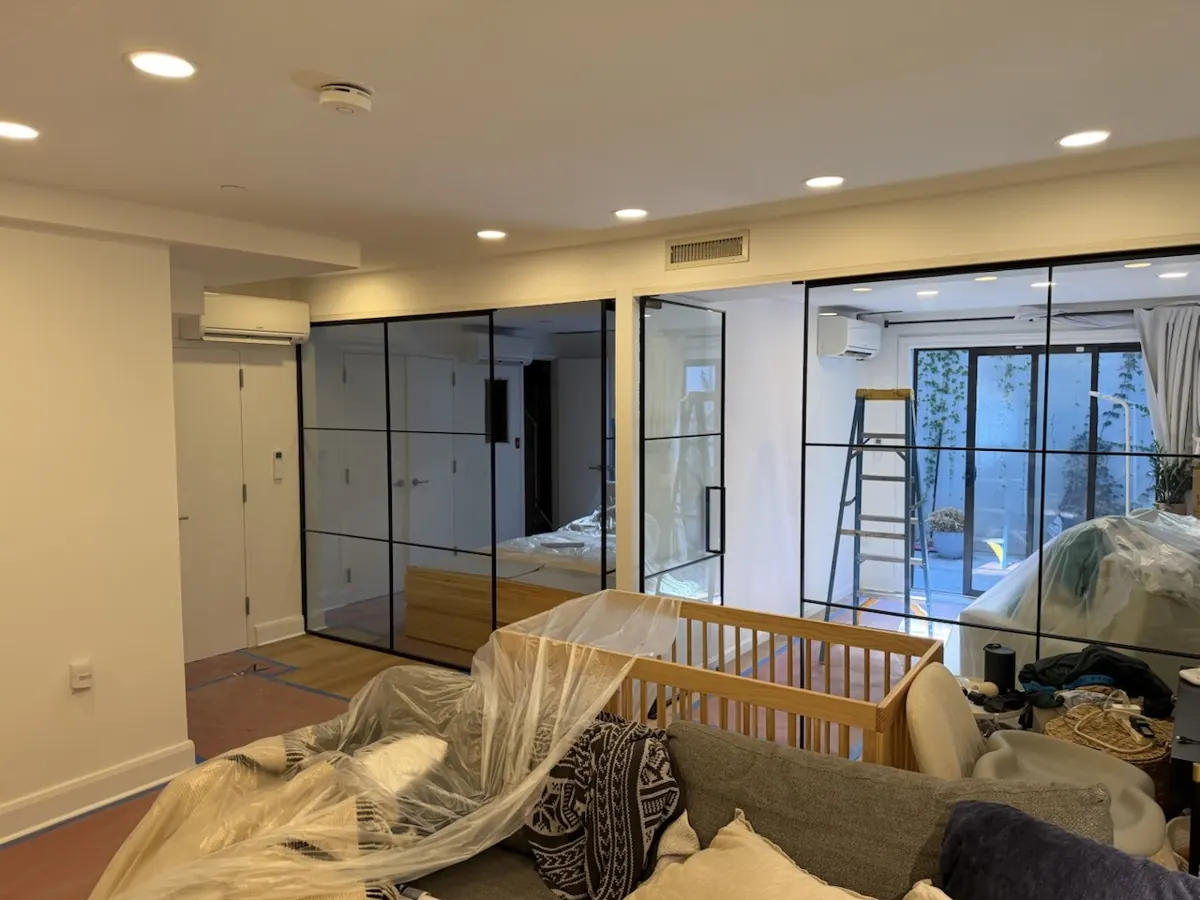
- Multi-zone ductless heat pumps. Each room or area gets its own indoor head, which works well for sun-exposed rooms and homes without good duct paths. See our multi-zone mini split design guide.
- Hybrid systems. A ducted system for the main living level, ductless heads for the primary suite or a hot glass room, and perhaps nothing at all for a naturally cool lower level.
Zoned heat pumps also handle LA's mild winters well, so the same equipment can provide heating without a separate gas furnace on each level.
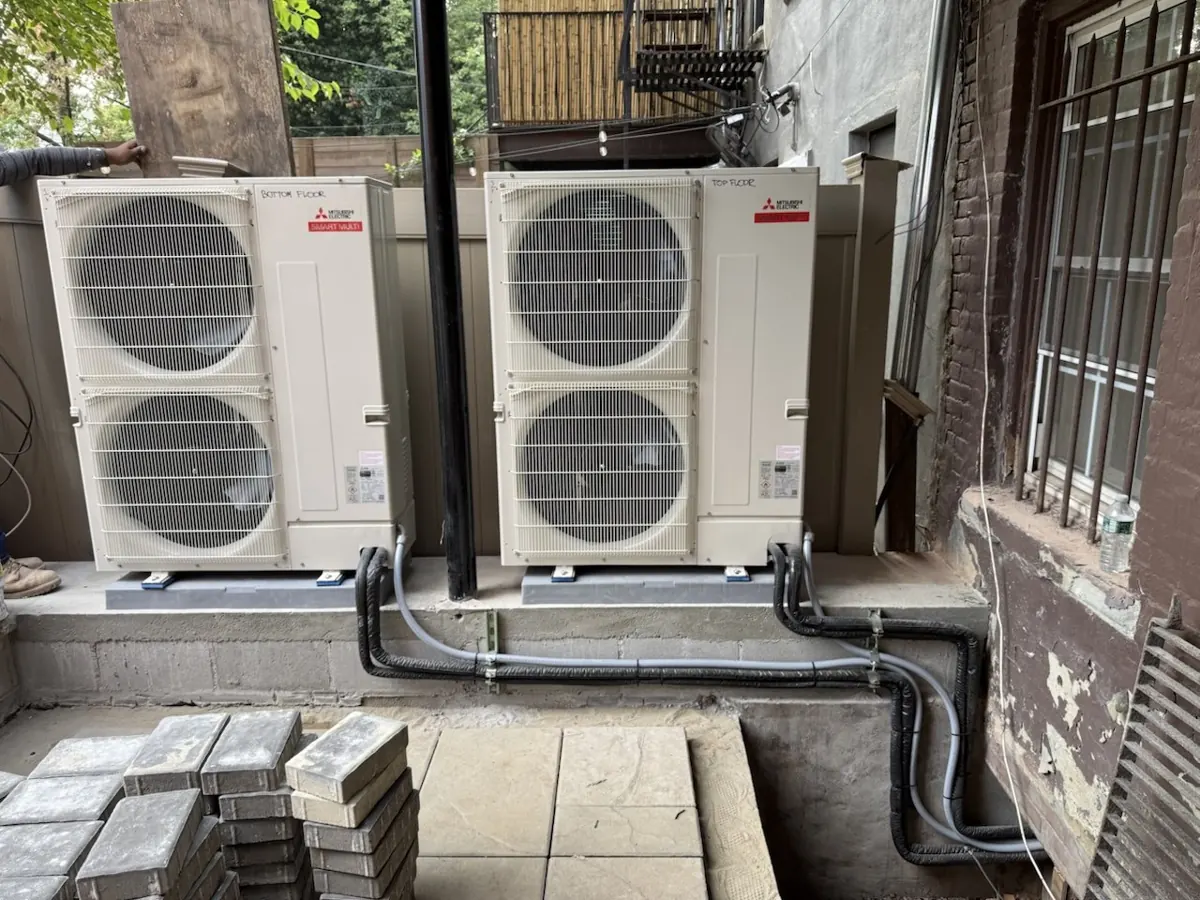
Equipment placement on slopes, decks and roofs
Hillside lots rarely have an obvious flat spot for a condenser. The usual options:
| Location | Advantages | Considerations |
|---|---|---|
| Pad cut into the slope | Stable, easy to service once built | May need retaining work, drainage and a safe access path |
| Structural deck or stand | Uses existing level space close to the house | Mounting must be structurally sound; vibration isolation matters |
| Wall bracket | Works for smaller ductless outdoor units | Weight limits, vibration into walls, safe service access |
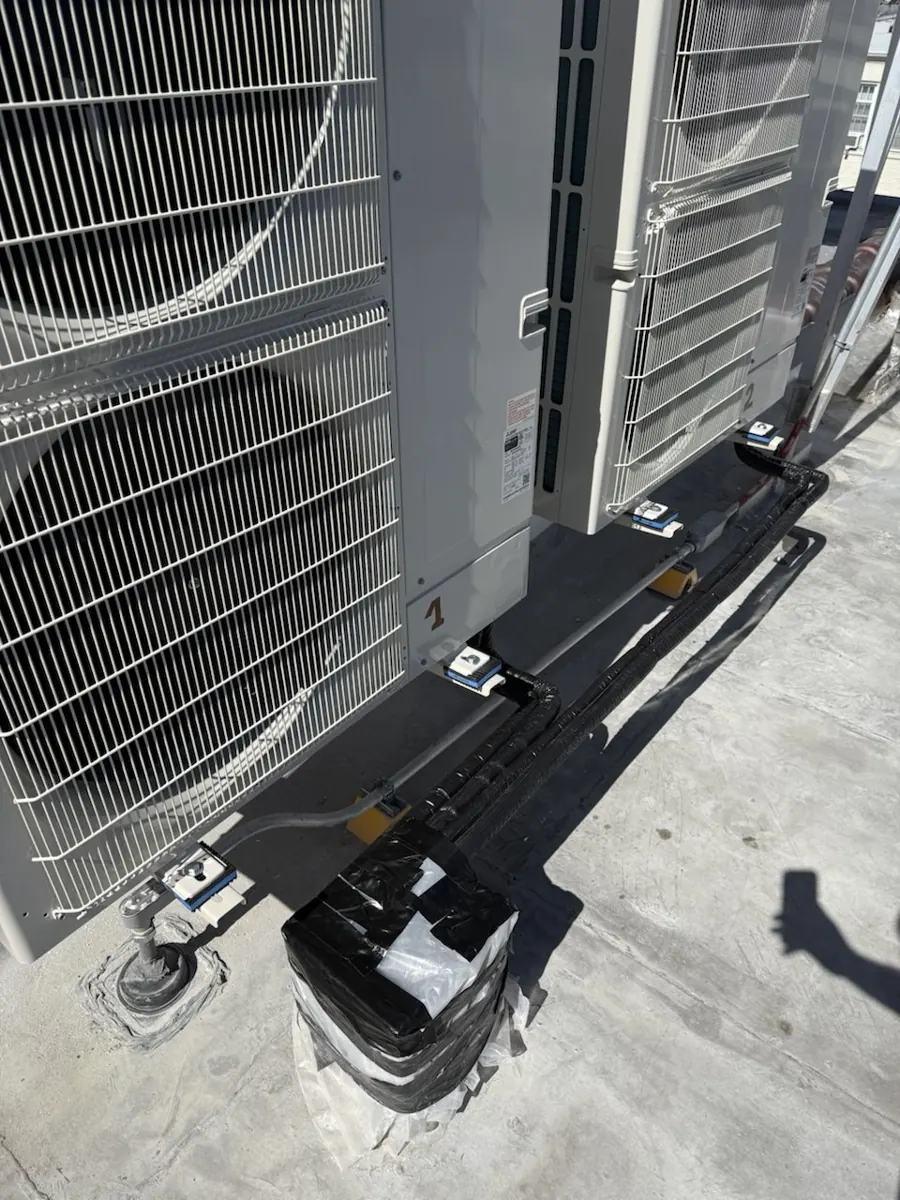
| Roof | Out of sight, keeps yard space free, short runs to upper floors | Roof penetrations and curbs, possible crane lift, service access, heat on the roof |
| Garage or street-level area | Easy delivery and service | Long line sets to lower levels; noise near the street |
Whatever location is chosen, the equipment needs manufacturer airflow and service clearances. Tucking a condenser into a tight corner under a deck can trap hot discharge air and hurt performance exactly when it is needed most, during a late-summer heat wave.
Crane lifts and rooftop units
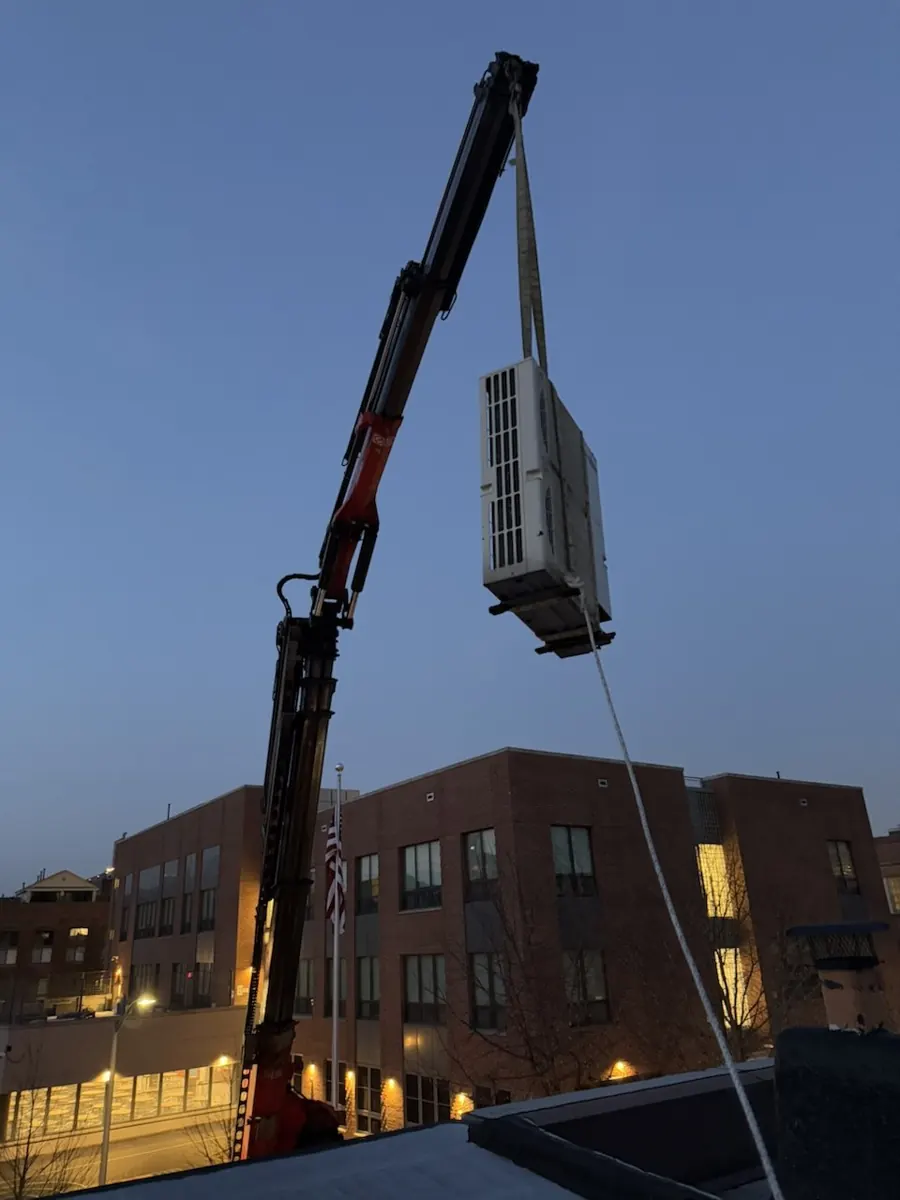
Some hillside homes have rooftop package units or rooftop condensers, either by original design or because there was nowhere else to put them. Replacing them can require a crane or lift, especially when the equipment is heavy and the only path is a narrow stair or a steep slope.
A crane lift has to be planned: street access for the truck, traffic control on narrow canyon roads, timing, and sometimes city or neighbor coordination. It is one of the factors that can affect a quote, which we explain in what drives heat pump installation cost in Los Angeles. Sometimes a change in equipment type, for example moving from a heavy rooftop package unit to a split system or heat pump with a lighter outdoor unit, simplifies future service as well.
“We recently had our rooftop AC unit replaced by Back2Cool HVAC, and we’re very happy with how everything turned out. Replacing an entire AC system is a pretty big job, so we wanted to make sure we hired someone who knew what they were doing. The technician was very polite, easy to talk to, and answered all our questions without making us feel rushed.”
Стас Стасян · Google review
Planning a new system? Get a free in-home estimate with a load calculation and a written quote with exact model numbers. Call (818) 230-4038 or use the form — or text us a photo of your current system.
Long line sets and access on hillside lots
When the outdoor unit sits at street level and the bedrooms are two levels down, refrigerant line sets get long. Manufacturers set limits on total length and vertical rise between indoor and outdoor units, and a design that pushes those limits can lose capacity or need extra refrigerant and careful installation.
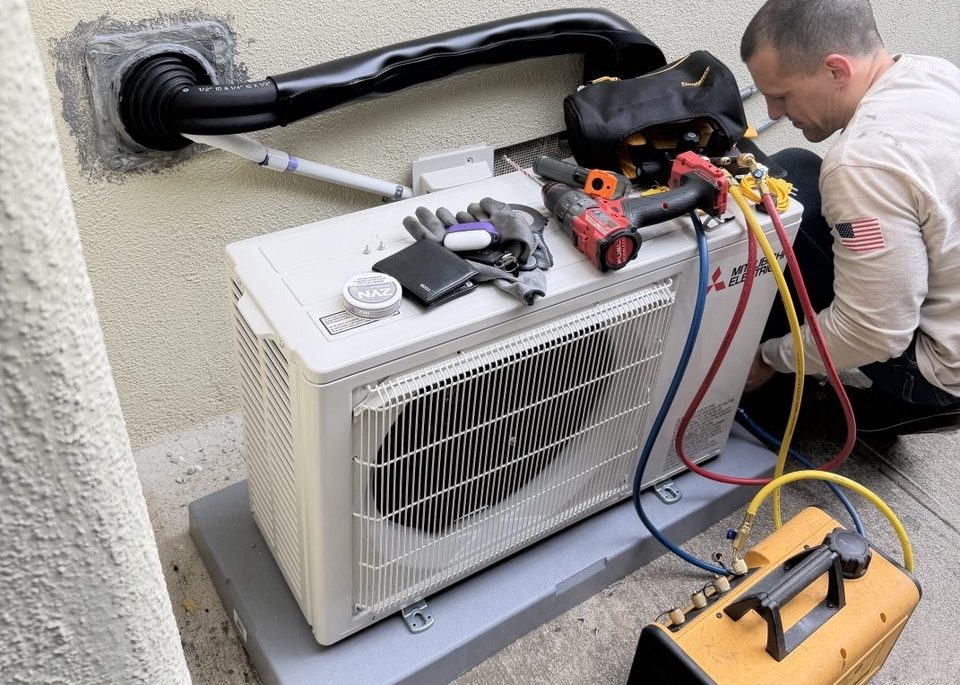
Good hillside design keeps runs as short as practical, uses branch boxes or multiple outdoor units where that reduces long runs, and routes lines where they can be protected and serviced. Exterior runs on stucco can be enclosed in painted line-hide covers. Interior runs may follow closets, chases or crawlspaces.
Access affects the whole job: carrying equipment down long stairways, staging materials on narrow streets with limited parking, and protecting landscaping and finished surfaces along the way. These are routine on hillside projects but should be discussed at the estimate so there are no surprises.
Noise and neighbors
Sound travels in canyons. A condenser that is barely noticeable on a flat street can echo across a hillside toward a neighbor's deck or bedroom window. Placement matters as much as equipment choice.
- Choose inverter-driven equipment, which runs at lower speeds most of the time and is generally quieter.
- Keep outdoor units away from neighbors' windows, decks and pools, and from your own bedrooms.
- Isolate vibration on decks, stands and wall brackets.
- Check local noise and setback rules before finalizing a location.
HOA and hillside rules
Some hillside neighborhoods and private communities have HOA rules about visible equipment, roof equipment and screening. Hillside areas within the City of LA and neighboring cities can also have specific rules affecting construction, setbacks and structures on slopes. For a standard HVAC changeout these rarely block a project, but a new pad, a new rooftop location or a structural deck mount can raise questions. Check with your HOA and your building department (LADBS for City of LA homes, or the local department in Beverly Hills, Burbank or Glendale) early. Our article on AC replacement permits in Los Angeles covers the permit side, including Title 24 and HERS.
Wildfire smoke filtration
Hillside homes sit close to brush and open space, and recent fire seasons, including the January 2025 Palisades and Eaton fires, made smoke protection a real priority. Your HVAC system can help:
- Ducted systems can use higher-efficiency media filters, but only if the system and return are designed for the added airflow resistance. A thick filter jammed into a small return can starve the system.
- Recirculation matters. During smoke events, keep the house closed and run the fan to filter indoor air.
- Ductless systems have washable screens that are not designed for fine smoke particles, so portable air cleaners in key rooms are a smart companion.
- Tight ductwork keeps attic and crawlspace air from being pulled into the house. Leaky returns in a dusty attic are a common problem.
Santa Ana winds
Santa Ana winds bring hot, dry, gusty conditions, often in fall, when hillside homes are most exposed. For HVAC that means a few things: outdoor units need secure mounting, especially on decks and roofs; debris guards and clear surroundings help keep coils from clogging with leaves and dust; and filters load faster during wind events and should be checked afterward. Hot, dry Santa Ana days are also when a correctly sized, well-zoned system proves its worth.
Ducts, attics and crawlspaces in hillside houses
Hillside homes often have unusual duct paths. Ducts may run through shallow attics under low-slope roofs, through crawlspaces on the downhill side, or through chases between levels that were never designed for airflow. Many older hillside houses from the 1950s and 60s have ducts that were added or extended over the years, with long, twisting runs that deliver little air to the farthest rooms.
Before keeping an existing ducted system, it is worth checking whether the ducts are sized and sealed well enough to deliver air to every level. Where they are not, options include repairing and sealing the worst runs, replacing ducts serving one level, or switching some rooms to ductless or slim ducted heat pumps. When ducts are altered or replaced, Title 24 may call for HERS duct leakage testing. Our ducted vs ductless heat pump guide covers how to weigh those options.
Heat pumps on the hillside
LA's mild winters make heat pumps a natural fit for hillside homes, which often have older gas furnaces tucked into tight closets or attics that are difficult to service. Replacing a furnace and AC with a heat pump can simplify the system to a single outdoor unit and an indoor air handler or set of heads, and remove gas equipment from cramped spaces. It also means one system to maintain on a property where every service visit involves stairs. Read more in replacing a gas furnace with a heat pump in California.
Hillside service areas we work in
We regularly work on hillside and canyon homes in the Hollywood Hills, Studio City, Glendale and Beverly Hills, along with flatter neighborhoods across greater LA. Each has its own building department or utility mix, which affects permits and rebates.
How HVAC Installation LA handles this
We start every hillside quote with a Manual J load calculation that accounts for glass, orientation and each level, then give you a written quote with exact model numbers, scope and price. When it helps, we quote options side by side, such as a ducted system per level versus a multi-zone heat pump. We pull the permit, handle Title 24 and HERS testing, and file utility rebate paperwork with LADWP, SCE, BWP or GWP when equipment qualifies. Floors are covered, the site is cleaned and old equipment is hauled away, including from rooftops. Not sure whether to repair or replace? Send a photo of your system for a straight answer.
See our heat pump installation, multi-zone installation and AC installation services. Free in-home estimates for installations: call (818) 230-4038, email estimates@hvacinstallationla.com, or contact us.
Frequently Asked Questions
01What is different about HVAC for hillside homes in Los Angeles?
Hillside homes often have big glass walls facing the sun, multiple split levels, steep access and little flat ground for equipment. That affects sizing, zoning, equipment placement, line set length and installation logistics.
02Where do you put an AC condenser on a hillside lot?
Common options are a level pad cut into the slope, a stand or bracket on a structural deck or wall, or the roof. The right spot balances airflow clearances, service access, noise toward neighbors and the length of the refrigerant run.
03Do hillside AC installations need a crane?
Sometimes. Rooftop units and heavy equipment that cannot be carried safely up stairs or a slope may need a crane or lift. Whether one is needed depends on equipment weight, access and placement, and it should be decided at the estimate.
04Are ductless mini splits good for Hollywood Hills homes?
Often, yes. Split-level hillside homes are hard to serve evenly with one ducted system, and ductless or multi-zone heat pumps let each level and each sun-exposed room be controlled separately.
05How can my HVAC help with wildfire smoke?
A ducted system can use a higher-efficiency filter if the system is designed for the added resistance, and ductless systems can be paired with portable air cleaners. Keeping the house closed and recirculating filtered air is the goal during smoke events.
06Do hillside homes need special permits for HVAC?
The HVAC permit itself is the standard one from LADBS or your city's building department, but hillside lots can carry extra considerations like setbacks, HOA rules, structural mounting and neighborhood noise limits. Check them before choosing equipment locations.