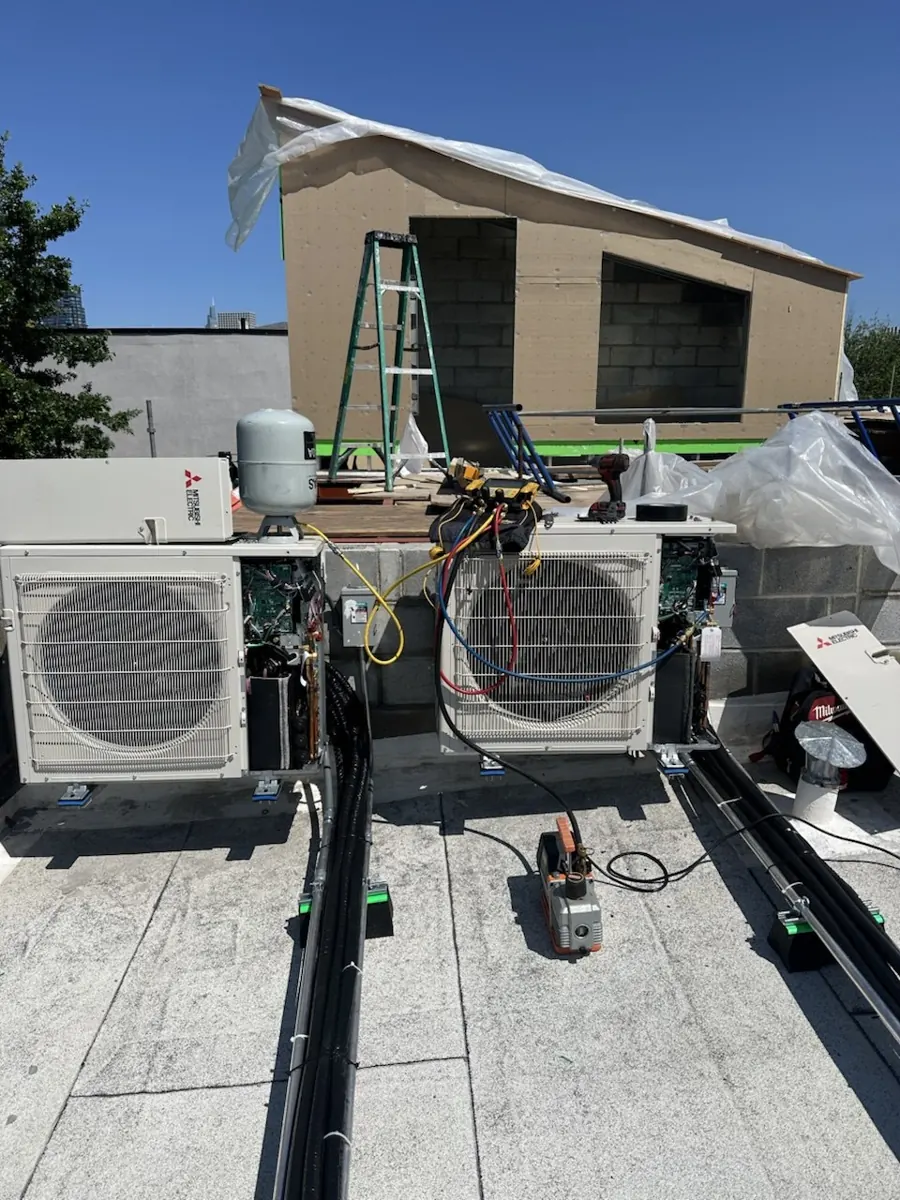
Knowing the HVAC installation process ahead of time takes most of the stress out of the day. For a typical Los Angeles home replacing a central AC, heat pump or furnace, the actual installation happens in one day: the crew arrives in the morning, protects your floors, removes the old equipment, sets the new system, connects refrigerant lines, electrical and drains, vacuums and charges the system, tests it, walks you through it and hauls away the old equipment.
The process starts well before that day and finishes after it. Before installation comes the load calculation, written quote, permit and scheduling. After installation comes the city inspection, HERS verification where required, rebate paperwork and your first filter change. This guide walks through every stage, with a prep checklist and an hour-by-hour sense of the day.
Before installation: the steps that set up a good install
1. Load calculation and system design
A good installation starts with sizing. We do a Manual J load calculation on every quote, looking at square footage, insulation, windows, orientation, ceiling height and how the house is used. That determines the right capacity, which avoids the short cycling and uneven comfort that come from oversized equipment. For ductless and multi-zone systems, it also determines how many indoor units you need and where. Read what size AC do I need for more on why this matters.
2. Written quote with exact model numbers
Your quote should list exact model numbers for the outdoor and indoor equipment, the scope of work (line set, electrical, ductwork, thermostat, drain, pad or stand), permit and testing, and the price. If you are comparing options, such as a new AC and furnace versus a heat pump, you should see them side by side. Model numbers let you verify efficiency ratings, as explained in our SEER2 guide.
3. Permit pulled
HVAC changeouts in California require a permit. In the City of Los Angeles that means LADBS; Beverly Hills, West Hollywood, Burbank and Glendale each have their own building departments. The permit triggers Title 24 compliance and, depending on scope, HERS verification. Our AC replacement permit guide covers the details.
4. Scheduling
Once equipment is confirmed, we schedule the install date. During late-summer and fall heat waves, demand spikes across LA, so earlier planning gives you more flexibility.
5. Prep at your home
A little preparation keeps the day smooth:
- Clear access to the furnace or air handler closet, attic hatch, garage, side yard, roof access and electrical panel.
- Move fragile items and valuables away from the work path and from below the attic hatch.
- Pets should be secured in a room away from the work, since doors will open and close often.
- Parking for the work truck, ideally in the driveway or directly in front. On narrow hillside streets in the Hollywood Hills or Studio City, let us know about parking restrictions in advance.
- HOA notice for condos and townhomes: many HOAs need notice for contractor access, elevator use, roof access or work hours.
- Gate codes and keys for side gates or roof access.
Installation day timeline: the HVAC installation process hour by hour
Timing varies by job, but a typical single-system replacement follows this sequence.
Morning: arrival, protection and review
The crew arrives, confirms the scope with you and walks the path to each piece of equipment. Floors along the work path are covered, and drop cloths go down near the indoor unit. This is a good time to raise any last questions about thermostat location or outdoor unit placement.
“They covered the floors, double checked everything, and explained what they did without me even asking.”
Bohdan Bodnar · Google review
Removal and refrigerant recovery
Power to the equipment is shut off. Before the old outdoor unit is disconnected, its refrigerant is recovered into a recovery cylinder rather than vented. If a furnace is being replaced, the gas is shut off at the appliance and the flue is disconnected. The old outdoor unit, indoor coil, furnace or air handler are removed and staged for haul-away.
Setting new equipment
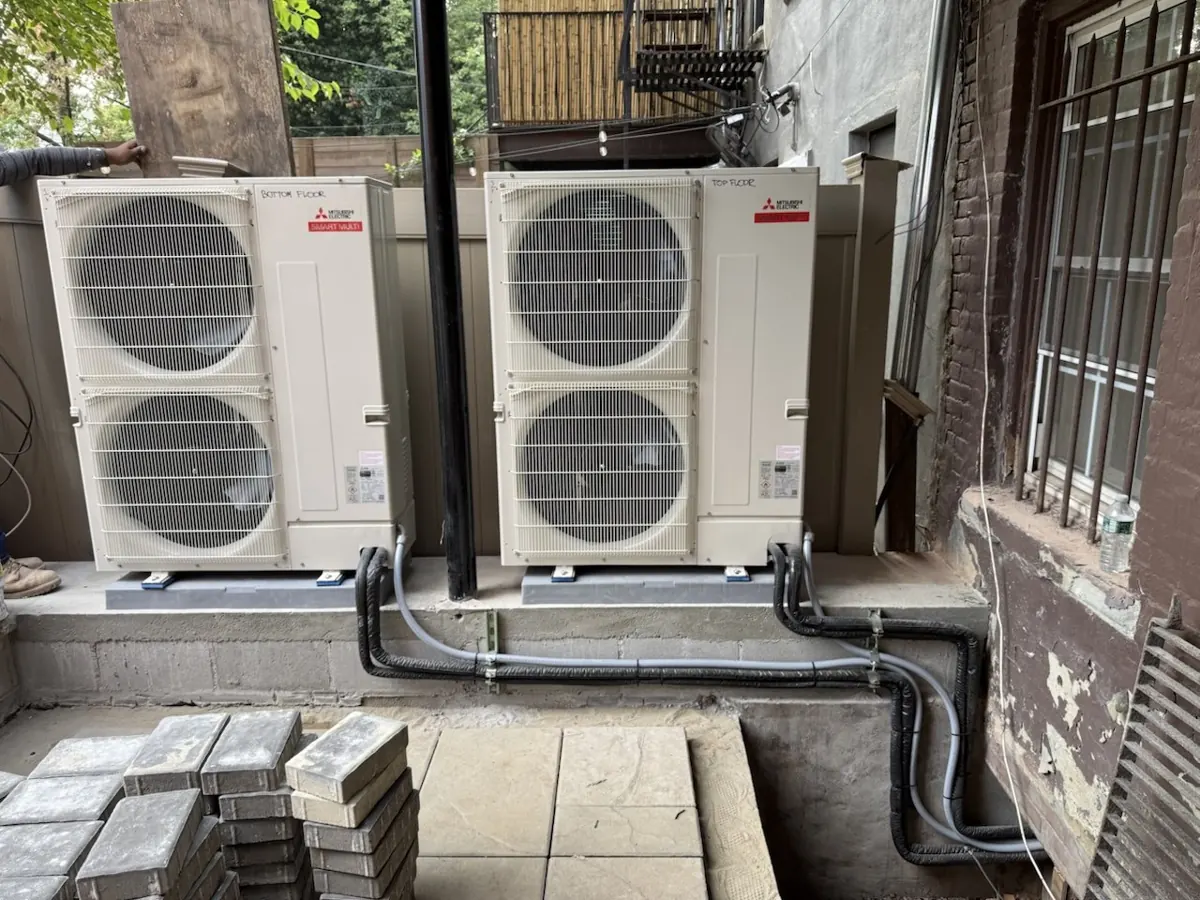
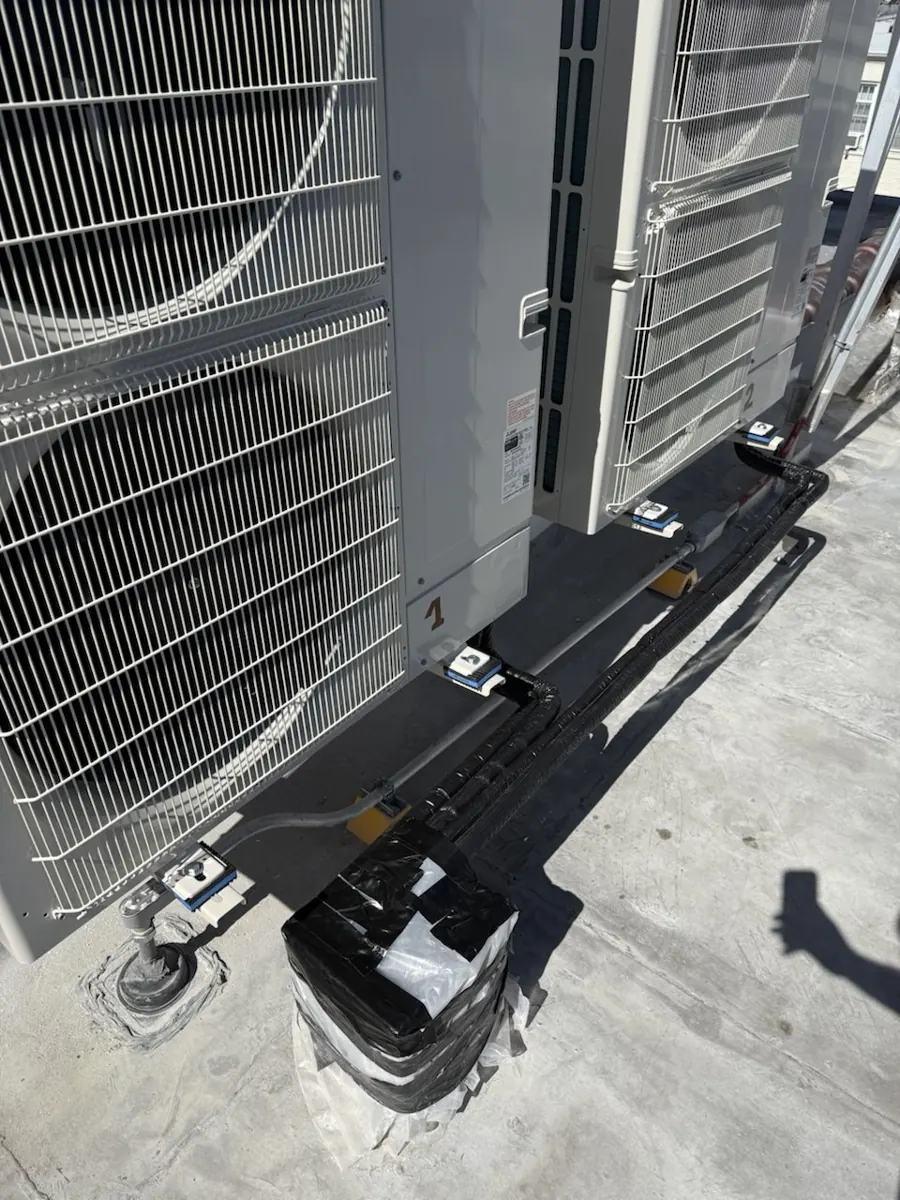
The new indoor unit (furnace, air handler or coil) is set in place, leveled and connected to the existing or new plenum and ductwork. The outdoor unit goes on a pad, wall bracket, stand or roof curb as specified. On hillside homes, this step can involve extra rigging. Our hillside HVAC guide covers access challenges.
Line set, electrical and condensate
- Line set. Refrigerant lines are either replaced or, if suitable, cleaned and reused. New equipment uses A2L refrigerants (R-454B or R-32), so line set condition and compatibility are evaluated during the quote. Connections are brazed or made with approved fittings.
- Electrical. The disconnect, whip and circuit are connected or upgraded as needed, and low-voltage control wiring is run to the thermostat.
- Condensate. The indoor unit's drain line is connected, with a secondary drain pan or float switch for attic installations, so a clog cannot flood a ceiling.
Vacuum and charge
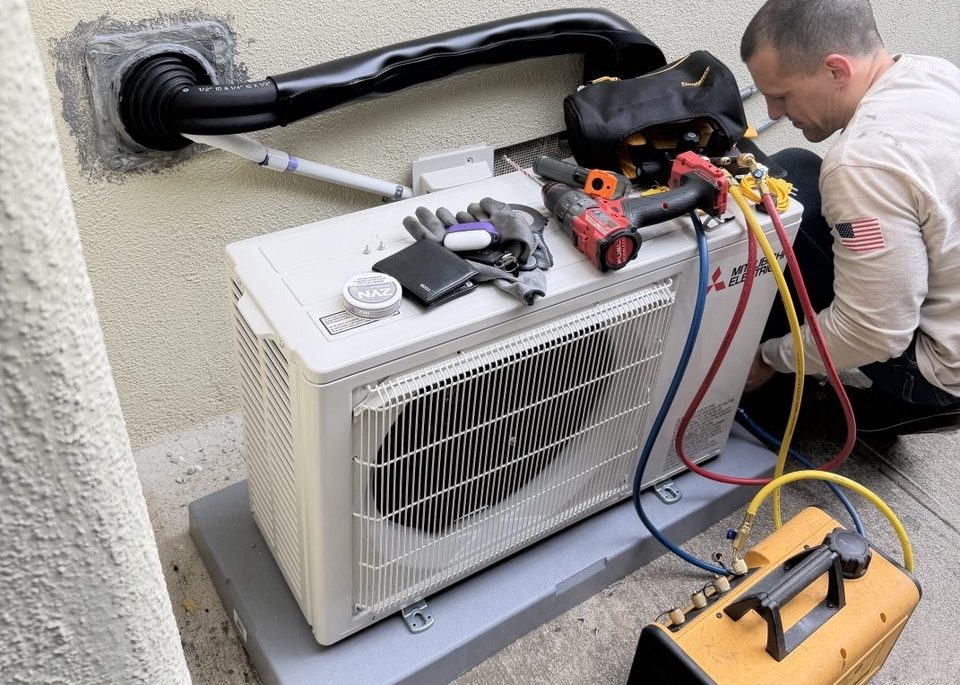
This is the step that separates a good install from a mediocre one. The refrigerant circuit is pressure-tested for leaks, then evacuated with a vacuum pump to remove air and moisture, verified with a micron gauge. Only then is refrigerant released or added. The charge is set according to manufacturer specifications.
Startup and testing
The system is started and run through its modes: cooling, heating and fan. We check temperatures, pressures, airflow and electrical readings, and confirm the drain is working. The thermostat is configured for the equipment type, which matters especially for heat pumps.
Walkthrough
We show you how to use the thermostat, where the filter is and what size it takes, where the outdoor disconnect is, and anything specific about your equipment. This is the time to ask questions.
Cleanup and haul away
Floor protection comes up, the work areas are cleaned, and the old equipment is hauled away. You should not be left with a pile of old metal in your side yard.
Planning a new system? Get a free in-home estimate with a load calculation and a written quote with exact model numbers. Call (818) 230-4038 or use the form — or text us a photo of your current system.
Special situations that change the day
Most installs follow the timeline above, but some Los Angeles homes add steps worth knowing about in advance.
- Rooftop package units. Many homes in the Valley and some condos have rooftop equipment. Replacing it may require a crane lift, which needs a clear set-up area and sometimes street access coordination. The curb adapter and roof penetration are checked and sealed.
- Furnace-to-heat-pump conversions. When a gas furnace is replaced by an air handler, the gas branch line is capped and the flue is removed or adjusted for any remaining gas appliances. A new circuit may be needed for the air handler. Our guide on replacing a gas furnace with a heat pump explains these steps.
- Duct replacement. If old attic ducts are being replaced, add time for removal and new runs, plus duct leakage testing afterward. In older homes, suspect duct insulation should be tested before it is disturbed.
- Panel work. If the electrical panel needs an upgrade, that work may happen on a separate day and require utility coordination.
- Condos and HOAs. Work hours, elevator reservations, roof access and equipment placement rules can shape the schedule.
Multi-zone mini split installations
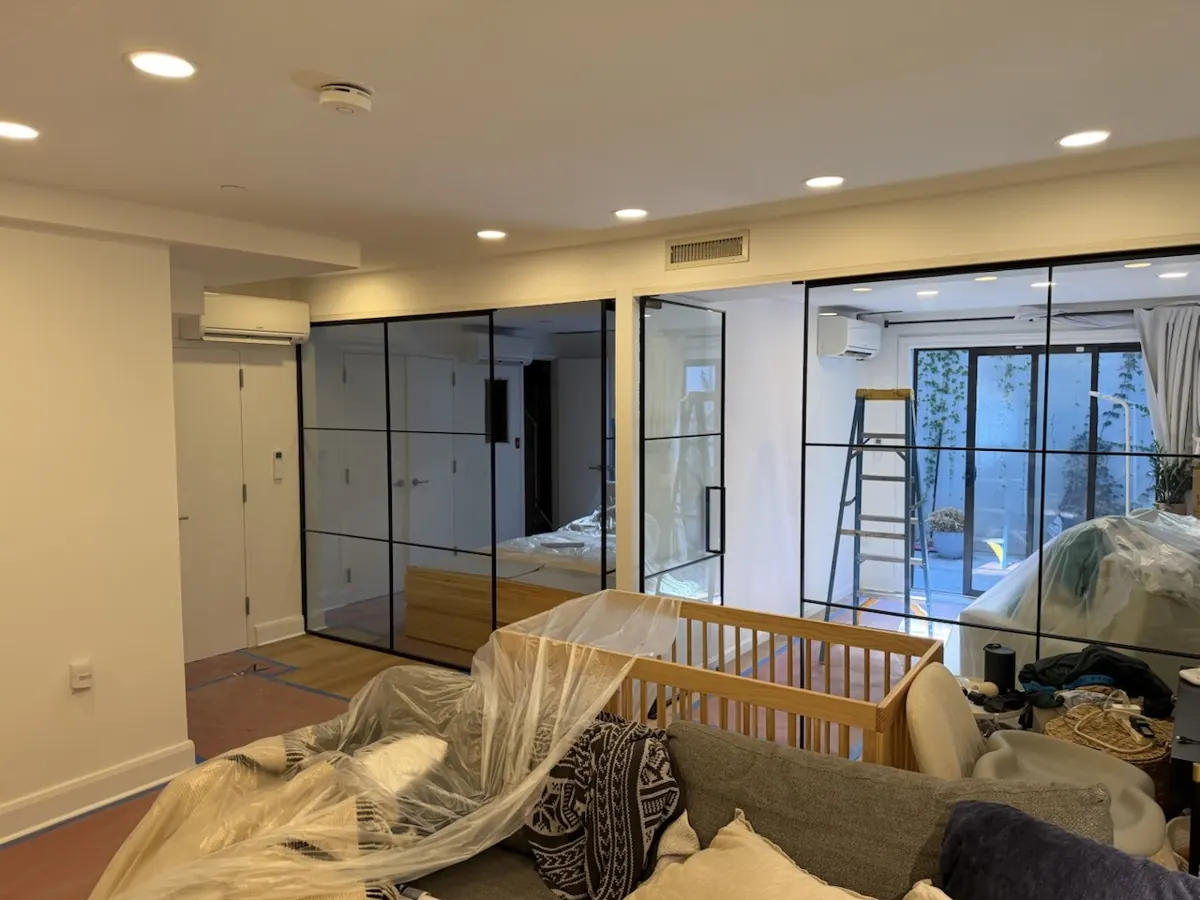
Multi-zone ductless installs follow the same principles with more moving parts. Each indoor head needs a wall penetration, a refrigerant line pair, a condensate drain and a control wire, and each line set must be pressure-tested and vacuumed. Line set routing through attics, crawlspaces or exterior walls takes careful planning, especially in older homes with plaster walls. Plan on the crew being there for more than one day on larger systems. See multi-zone installation and our guide to multi-zone mini split design.
After installation: inspection, HERS and rebates
City inspection
The building department inspector checks the permitted work: equipment, electrical connections, gas and venting if applicable, clearances, condensate and outdoor unit placement. Someone needs to provide access on inspection day.
HERS verification
Under Title 24, a third-party HERS rater may need to verify refrigerant charge, airflow and, when ducts are altered or replaced, duct leakage. Requirements depend on the scope of your project. If the ducts fail leakage testing, sealing or repair may be needed before the permit can be finaled.
Rebate paperwork
If your equipment qualifies for a utility or state program, the paperwork is filed after installation. Programs from LADWP, SCE, Burbank Water and Power and Glendale Water and Power, and statewide initiatives like TECH Clean California, change over time, so check current availability. See the rebates page.
Your first filter change
New systems often pull construction dust in the first weeks. Check your filter within the first month or two and replace it if it is loaded. After that, follow the interval for your filter type, and check it more often during wildfire smoke events or Santa Ana winds.
HVAC installation day checklist
| When | What to do |
|---|---|
| At the quote | Confirm a Manual J load calculation was done; get exact model numbers, scope and price in writing |
| Before the install | Confirm the permit is pulled; ask about the expected timeline |
| 1 week before | Notify your HOA if required; plan parking; confirm gate and roof access |
| Night before | Clear access to the attic, closet, yard and panel; move fragile items |
| Morning of | Secure pets; walk the scope with the crew; confirm thermostat and outdoor unit locations |
| End of day | Do the walkthrough; learn thermostat and filter basics; confirm old equipment is hauled away |
| After | Provide access for the inspection and HERS test; keep paperwork; check the filter |
Red flags during the process
- No load calculation, just "same size as before."
- No mention of a permit, or a suggestion to skip it.
- Vague quotes without model numbers.
- No vacuum step, or "we just top it off."
- Crews leaving debris or old equipment behind.
For a full list of questions to ask before hiring, read how to choose an HVAC installer in Los Angeles.
How HVAC Installation LA handles this
We do a Manual J load calculation on every quote and provide a written quote with exact model numbers, scope and price, with options side by side when it makes sense. We pull the permit, handle Title 24 and HERS testing, and file the utility rebate paperwork with LADWP, SCE, BWP or GWP when the equipment qualifies. On installation day, floors are covered, the site is cleaned and old equipment is hauled away. Not sure whether to repair or replace? Send a photo of your system for a straight answer.
“We recently had our rooftop AC unit replaced by Back2Cool HVAC, and we’re very happy with how everything turned out. Replacing an entire AC system is a pretty big job, so we wanted to make sure we hired someone who knew what they were doing. The technician was very polite, easy to talk to, and answered all our questions without making us feel rushed.”
Стас Стасян · Google review
We install central AC, heat pumps, ductless mini splits and furnaces across West Hollywood, Hollywood Hills, Burbank and greater LA. Call (818) 230-4038 or book a free in-home estimate.
Frequently Asked Questions
01How long does an HVAC installation take?
A typical single-system replacement, such as a central AC, heat pump or furnace changeout, is usually done in one day. Larger jobs like new ductwork or multi-zone mini splits can take longer; a 5-zone mini-split project we completed took about two days.
02Do I need to be home during HVAC installation?
It helps to be home at the start to confirm equipment locations and access, and at the end for the walkthrough. In between, you just need to make sure the crew can reach the attic, closet, yard or roof.
03Will my power or gas be shut off?
Power to the HVAC circuits is shut off while the crew works, and gas to the furnace if it is being replaced. The rest of the house usually stays powered, though brief shutoffs may be needed for electrical work.
04What happens after the installation is finished?
The city inspector checks the permitted work, and a HERS rater may verify refrigerant charge, airflow and duct leakage depending on the scope. Rebate paperwork is filed when the equipment qualifies.
05How should I prepare for HVAC installation day?
Clear a path to the equipment, move valuables and fragile items, arrange parking for the crew, secure pets, and give your HOA notice if required. Make sure the attic hatch or closet is accessible.
06When should I change the filter on a new system?
Check it within the first month or two, since construction dust can load a new filter quickly, then follow the replacement interval for your filter type. Change it sooner during wildfire smoke events.