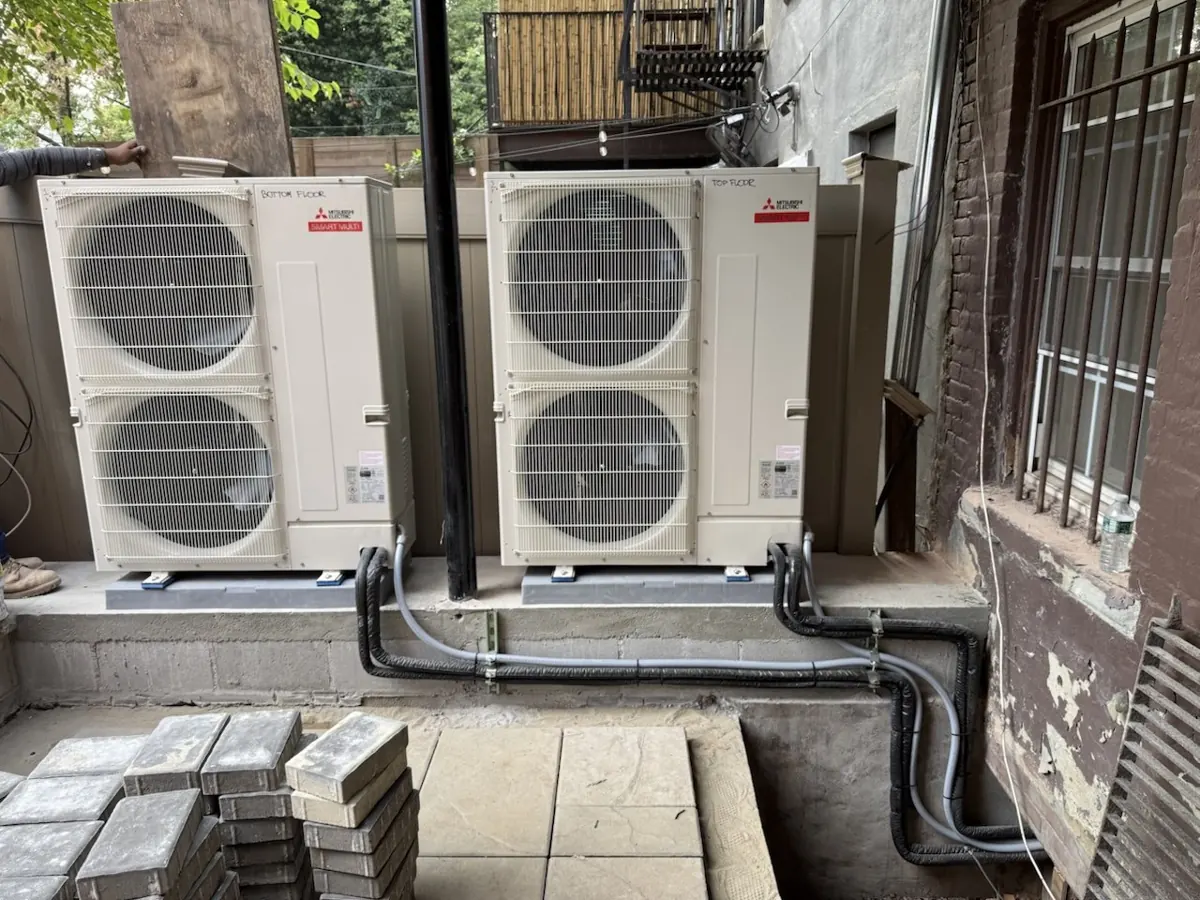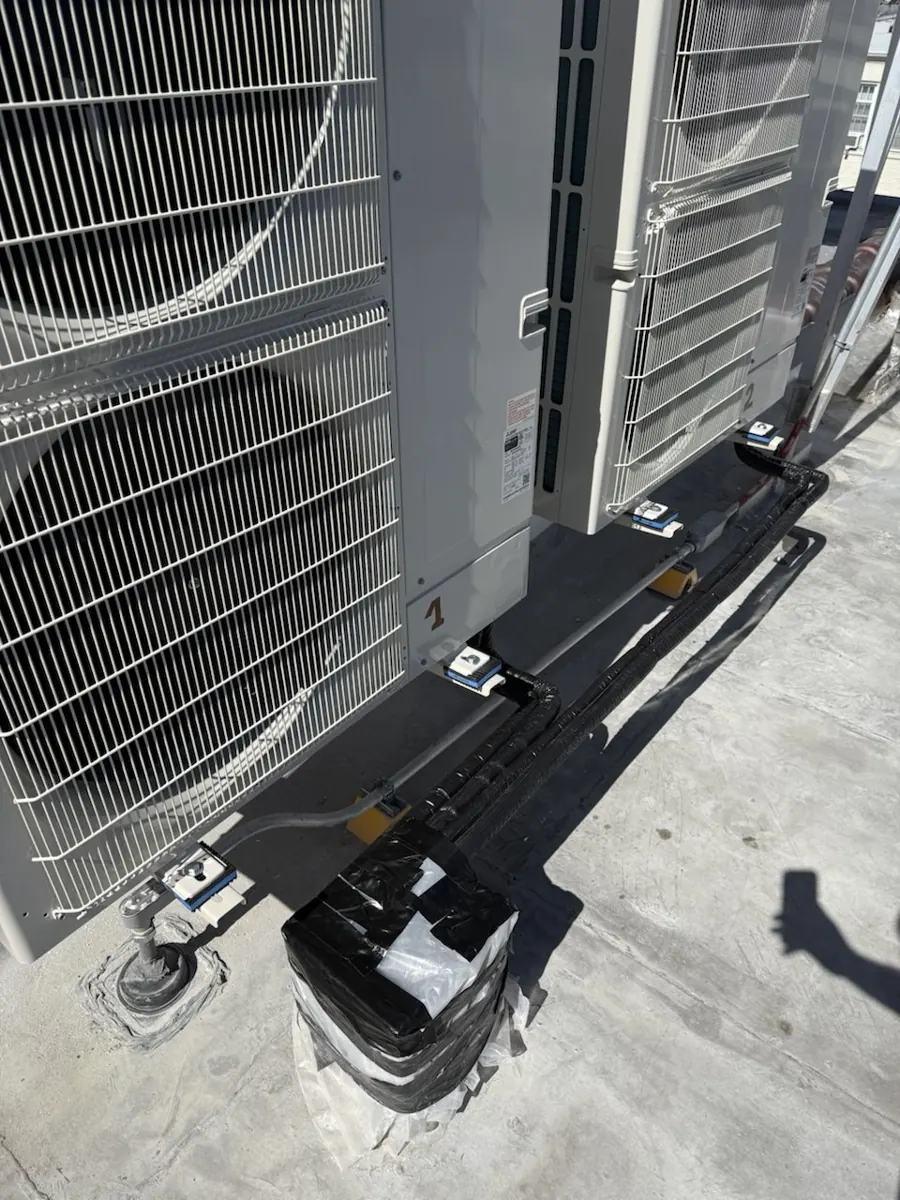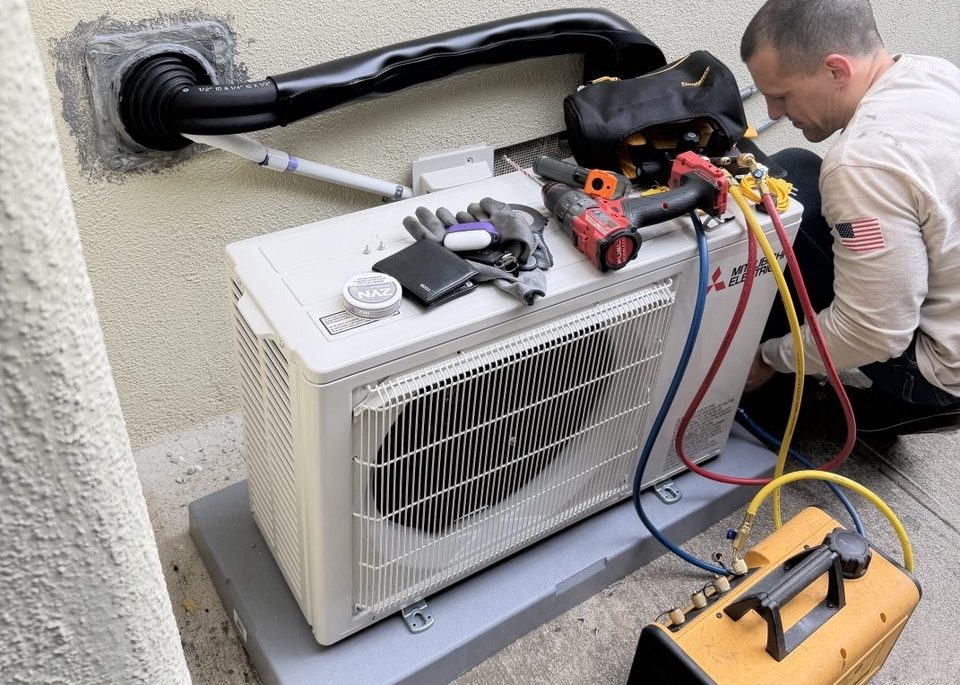
Choosing an HVAC installer in Los Angeles matters more than choosing the equipment brand. Most major brands make solid systems; what determines whether yours runs efficiently, quietly and reliably for years is how it is sized, installed, charged and tested. A great system installed badly will underperform. A good system installed carefully will outperform its rating on paper.
The fastest way to tell installers apart is to ask the right questions and listen to the answers. Below are 12 questions to ask any HVAC contractor in LA, why each one matters, what a good answer sounds like, and a red flags table to keep handy while you compare quotes. You will also find how to verify a contractor's license through the state.
Start with the basics: check the contractor's license
Before you get into technical questions, verify that any contractor you are considering holds an active California license for HVAC work. The Contractors State License Board (CSLB) runs a free license lookup at cslb.ca.gov. Search by business name or license number and check that:
- The license is active, not expired or suspended.
- The business name matches the company quoting your job.
- The classification fits HVAC work.
- Any listed complaints or disciplinary actions are worth asking about.
This takes two minutes and is the simplest filter available. Then move on to the questions that reveal how a company actually works.
12 questions to ask an HVAC installer in Los Angeles
1. Will you do a load calculation?
Good answer: "Yes, a Manual J load calculation based on your home's size, insulation, windows, orientation and layout."
Sizing by the old unit's tonnage or a rule of thumb per square foot is how homes end up with oversized systems that short cycle, leave rooms uneven and wear out early. Undersizing is the opposite problem, especially in the Valley during heat waves. Read what size AC do I need for the details.
2. Will you pull the permit?
Good answer: "Yes, we pull the permit with your city."
In the City of Los Angeles, that is LADBS; Beverly Hills, West Hollywood, Burbank and Glendale each have their own building departments. A contractor who suggests skipping the permit to save money is telling you they are comfortable cutting corners. Unpermitted work can complicate rebates, home sales and insurance claims. Our AC replacement permit guide explains the process.
3. Will you handle Title 24 and HERS testing?
Good answer: "Yes. We handle Title 24 compliance and coordinate HERS verification as required for your scope."
California's Title 24 Part 6 energy code applies to HVAC changeouts. Depending on the job, a third-party HERS rater verifies refrigerant charge, airflow and, when ducts are altered or replaced, duct leakage. These tests catch the most common installation mistakes. An installer who is vague here may not be planning to close out the permit.
4. What exact model numbers are you quoting?
Good answer: A written quote listing the outdoor unit, indoor coil or air handler, and furnace model numbers.
"A 16 SEER2 Carrier system" is not a specification. Efficiency ratings apply to matched combinations, which you can verify on an AHRI certificate. Exact model numbers also let you compare bids fairly. See our SEER2 guide for how to check.
5. Who will actually do the installation?
Good answer: A clear name or description of the crew, ideally the company's own technicians, and a direct contact for questions.
Some companies are essentially sales operations: a call center books the appointment, a salesperson writes the quote, and the work is handed to whichever subcontractor is available. That is not automatically bad, but it adds distance between you and the people doing the work. One of our customers put it plainly:
“Fast response, competitive pricing and very communicative. If you want to deal directly with a service technician, call Nick. Most other places will direct you to a call center that sub-contracts the work out.”
Iconica Recordings · Google review
Ask who shows up, who is in charge on site, and who you call if something is off after the job.
6. Will you reuse my line set or replace it?
Good answer: "We will evaluate it. If it is the right size, in good condition and accessible, we may reuse it after proper cleaning and testing; if not, we replace it."
The refrigerant line set connects the indoor and outdoor units. New equipment uses A2L refrigerants (R-454B or R-32), and line sizing, condition and routing all matter. An installer who reuses every line set without checking, or replaces every one without explaining why, is not thinking about your specific house.
7. Will you test my ducts?
Good answer: "We will inspect them, and if we alter or replace ducts, leakage testing is part of the HERS process."
Leaky attic or crawlspace ducts are one of the biggest sources of wasted energy in LA homes, especially older ones. A new high-efficiency system connected to leaky ducts loses much of its advantage. A good installer will look at duct condition and tell you honestly whether repair or replacement is worth it. See ductwork installation.
8. How will you handle the vacuum and charge?
Good answer: "We pressure-test for leaks, pull a deep vacuum verified with a micron gauge, then charge to manufacturer specifications."
This is invisible to homeowners but critical. Moisture or air left in the system and incorrect charge reduce efficiency and shorten equipment life. HERS testing verifies the charge, but the process starts with the crew.
Planning a new system? Get a free in-home estimate with a load calculation and a written quote with exact model numbers. Call (818) 230-4038 or use the form — or text us a photo of your current system.
9. Will you handle rebate paperwork?
Good answer: "Yes, when the equipment qualifies, we file the paperwork with your utility."
LADWP, SCE, Burbank Water and Power and Glendale Water and Power have offered programs, and TECH Clean California is the statewide heat pump initiative. Programs change, so check current availability. A contractor who handles the paperwork saves you time and catches eligibility details, like matched AHRI combinations, before installation. See our California heat pump rebates guide and rebates page.
10. Will you protect my home and haul away the old equipment?
Good answer: "Floors are covered, the site is cleaned, and old equipment is removed."
It sounds minor until a crew leaves a rusted condenser in your side yard or tracks attic insulation across your hardwood. Ask specifically.
11. Will you quote options side by side?
Good answer: "Yes, for example a new AC and furnace versus a heat pump, or central air versus ductless."
Many LA homes have more than one valid path. A contractor who only offers one option may be selling what they stock, not what fits your house. Our guides to mini split vs central air and replacing a gas furnace with a heat pump cover common choices.
12. What happens on installation day, and how long will it take?
Good answer: A clear timeline: arrival, removal, refrigerant recovery, setting equipment, connections, vacuum and charge, startup and testing, walkthrough and cleanup, with a realistic number of days.
A typical single-system replacement is one day. Larger jobs like multi-zone mini splits or new ducts take longer. Read what to expect on HVAC installation day.
Red flags when choosing an HVAC contractor
| Red flag | Why it matters |
|---|---|
| Sizes by old unit or square footage only | Leads to oversized or undersized equipment and poor comfort |
| Suggests skipping the permit | No inspection, no HERS verification, possible rebate and resale problems |
| Quote has no model numbers | You cannot verify efficiency, compare bids or confirm what gets installed |
| Price given over the phone without a visit | No load calculation, no look at ducts, panel or access |
| High-pressure "today only" pricing | Pushes you to decide before comparing |
| Cannot say who will do the work | Likely a sales operation handing the job to an unknown subcontractor |
| Vague about line set, ducts or electrical | Hidden scope that shows up as change orders later |
| No mention of refrigerant recovery or vacuum | Signals shortcuts on the most technical part of the job |
| License does not show as active on cslb.ca.gov | Basic requirement not met |
LA-specific questions worth adding
The 12 questions above apply anywhere in California. Los Angeles homes add a few situations where an installer's experience shows quickly.
- Hillside homes. In the Hollywood Hills, Studio City and Glendale, ask where the outdoor unit will go, how equipment will be carried in, and how noise and setbacks are handled. Our hillside HVAC guide covers these.
- Older homes. For Craftsman, Spanish Revival and mid-century homes, ask how lines will be routed through plaster walls, whether old duct insulation should be tested before it is disturbed, and whether your panel has capacity. See HVAC for older LA homes.
- Condos and HOAs. Ask whether the installer has worked within HOA rules for roof access, equipment placement and work hours, and who handles that coordination.
- Heat waves and smoke. Ask how the system will hold up on the hottest Valley afternoons and what filtration options fit your air handler for wildfire smoke and Santa Ana wind days.
- Ductless and multi-zone. If you are considering mini splits, ask how many multi-zone systems the crew has installed recently and how they plan head placement, condensate drains and line routing.
How many quotes should you get?
Two or three detailed quotes is usually enough. More than that tends to add confusion rather than clarity, especially if each contractor proposes a different system. The goal is not to collect numbers; it is to find an installer whose process you trust and whose quote you can verify line by line. If one quote is far below the others, ask what is missing. If one is far above, ask what it includes that the others do not. A good contractor will explain the difference without getting defensive.
Reviews: what to look for
Reviews are useful, but read them for specifics rather than star counts. Look for mentions of communication, punctuality, cleanup, problem-solving and who actually showed up. Reviews describing how a company fixed someone else's bad install can be especially telling.
“These guys brought my split system back to life after some “installers” messed it up—and it’s only two years old! They found the leak and fixed everything in one day.”
Арина Москаленко · Google review
How HVAC Installation LA handles this
Here is how we answer the questions above. We do a Manual J load calculation on every quote. You get a written quote with exact model numbers, scope and price, and we quote options side by side when more than one path makes sense. We pull the permit, handle Title 24 and HERS testing, and file the utility rebate paperwork with LADWP, SCE, BWP or GWP when the equipment qualifies. Floors are covered, the site is cleaned, and old equipment is hauled away. Our lead tech is trained on Mitsubishi Electric, Daikin and Fujitsu equipment. Not sure whether to repair or replace? Send a photo of your system for a straight answer, or book a diagnostic visit with our $55 service call using promo code LA55.
We serve Beverly Hills, Hollywood Hills, West Hollywood, Studio City, Burbank and Glendale. Learn more about us, see HVAC replacement, call (818) 230-4038 or request a free in-home estimate.
Frequently Asked Questions
01What should I ask an HVAC contractor before hiring?
Ask whether they do a Manual J load calculation, pull the permit, handle Title 24 and HERS testing, list exact model numbers, use their own crew, evaluate the line set, test ducts, file rebate paperwork and haul away old equipment.
02How do I check an HVAC contractor's license in California?
Use the license lookup on the Contractors State License Board website at cslb.ca.gov. Search by business name or license number and confirm the license is active and in the right classification for HVAC work.
03Is it a red flag if a contractor says I do not need a permit?
Yes. HVAC changeouts in California require a permit and Title 24 compliance. Skipping it can cause problems with rebates, home sales and safety, and the HERS testing that comes with the permit verifies the system is working properly.
04Should I choose the lowest HVAC installation bid?
Not automatically. Compare bids on the same scope: matched model numbers, load calculation, permit, testing, line set, electrical, duct work and cleanup. A low bid often leaves out items another bid includes.
05Does it matter who actually installs my system?
Yes. Some companies sell the job through a call center and send a subcontractor. Ask who will be on site, whether they are the company's own technicians, and who you call if something needs attention.